Can You Sell Land in Wetlands, the Pinelands, the Highlands or the CAFRA Zone in New Jersey?
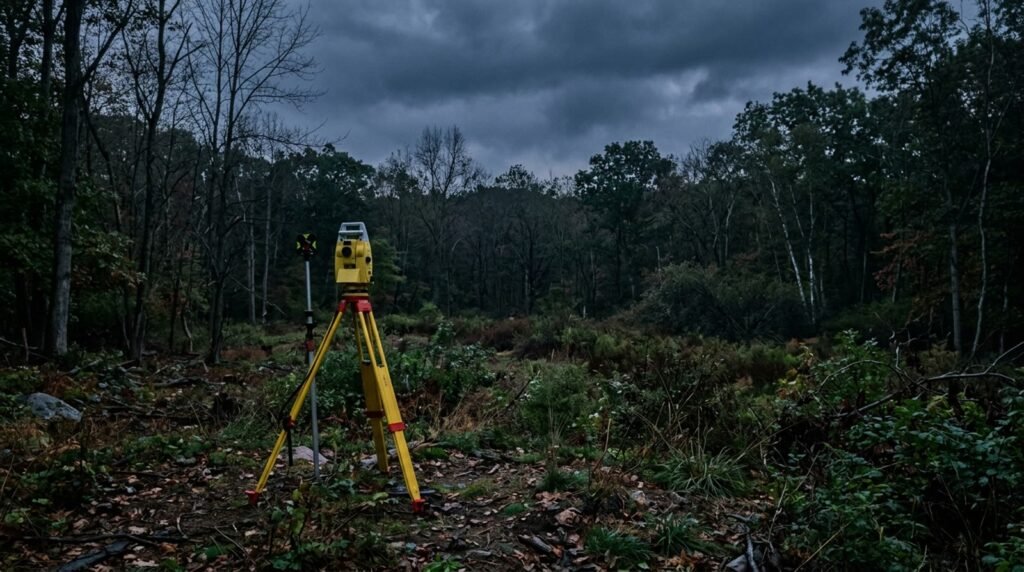
Yes, you can sell land in all four. These rules limit what a buyer can build, so they affect price and who the right buyer is, but they don’t make a parcel unsellable. What matters is how much of your parcel the rules actually cover, and the maps you find online often don’t answer that. We buy raw land across New Jersey. Here is how each one works, how to check your own lot, and where our own limits are.
This is general information, not legal advice. Your New Jersey attorney should review any contract and any regulatory question about your parcel.
What happens when you try to sell land with wetlands on it?
You can sell it. The wetlands limit what can be built, and a buyer will price in how much of the site they cover. New Jersey requires a permit or approval for any activity that may affect a wetland, including building houses, excavating, filling, draining, or cutting vegetation. The state also protects the strip of land beside a wetland, called a transition area, and building there needs a waiver.
NJDEP describes a wetland by three features: water at or near the surface for some part of the year, hydric (wet) soil, and plants adapted to wet conditions. A wetland doesn’t have to look wet all year. Many don’t fit the familiar picture of a swamp.
How do you find out if your land really has wetlands?
The maps are a first look, not an answer. NJDEP says its wetlands mapping is an approximation, usually based on aerial photography, and that the true extent on a site may be smaller or a very different shape. The state doesn’t rely on those maps for regulatory decisions.
The official answer is a Letter of Interpretation (LOI). NJDEP defines it as a document indicating the presence or absence of wetlands, State open waters or transition areas, verifying or delineating their boundaries, or assigning a wetland its resource value classification. There are five types:
| LOI type | What it tells you |
|---|---|
| Presence/absence | Whether wetlands, State open waters or transition areas exist on the site (or a portion of one acre or less), plus their classification. It does not map boundaries. |
| Presence/absence, footprint of disturbance | The same question for a defined footprint of no more than one acre. |
| Line delineation | The boundaries, on a site or tax lot of one acre or smaller. NJDEP inspects and draws the lines. |
| Line verification | The boundaries, on a site of any size. Your consultant proposes the lines and NJDEP confirms or modifies them. |
| Line verification, partial | Rare. For a portion of a large, publicly owned site. |
A wetlands consultant or engineer usually prepares the proposed lines. Ask a licensed professional which LOI fits your parcel.
Does BayfordBridge buy land with wetlands?
Only where a favorable wetlands delineation is achievable. We do not buy land with a large, unfavorable wetlands presence. That is an honest limit, and we would rather tell you on the first call than after you’ve waited.
Many parcels sit in between: some wetlands, but enough dry, buildable ground that the numbers still work. We look at that early, and we tell you the truth even when the land is constrained. If your parcel is mostly wetlands, a conservation buyer or the state’s Green Acres program (below) may be a better fit than we are.
Can you sell land in the Pinelands?
Yes. The Pinelands is a protected region with its own rulebook, so what a buyer can build depends on which part you’re in. The Pinelands Commission implements a comprehensive plan that guides land use, development and natural resource protection across the 938,000-acre Pinelands Area of southern New Jersey. The rules are in the Comprehensive Management Plan (CMP).
The CMP sets nine management areas, carried out through local zoning that must conform with Pinelands standards. Two examples show how far apart they are:
- Preservation Area District. No residential development is permitted, except one-acre lots in designated infill areas and “cultural housing” exceptions for property owned by families before 1979.
- Regional Growth Area. Residential densities of two to six homes per acre are permitted where sewers are available.
Those are generalized summaries; the Commission says they are a guide and subject to local conditions. Your parcel’s management area comes from the Pinelands Land Capability Map and your township zoning office. Pinelands land can sit in a county like Ocean, where we also see CAFRA rules; see how we approach Pinelands and CAFRA parcels in Ocean County.
A note on “limited practical use” land. If your parcel is under 50 acres, you own under 50 acres in the Pinelands National Reserve, and the Commission has reviewed and denied a home application under a Waiver of Strict Compliance, the Limited Practical Use Program lets you sell to the State. That is a state program, not something we run.
Can you sell land in the Highlands Preservation Area?
Yes. The Highlands Act adds a state approval layer to larger projects in the Preservation Area, but many smaller projects and single-family homes are exempt. The Highlands Water Protection and Planning Act (N.J.S.A. 13:20-1 et seq.) was signed in 2004. The Highlands Region covers parts of Bergen, Hunterdon, Morris, Passaic, Somerset, Sussex and Warren counties and has two areas:
- Preservation Area: about 398,000 acres, where NJDEP regulates “major Highlands development” and requires a Highlands Preservation Area Approval unless an exemption applies.
- Planning Area: the rest of the region. NJDEP states that its Highlands rules do not apply to projects there. The Highlands Council’s regional master plan is where enhanced standards can apply.
“Major Highlands development” is a defined term. For residential projects it includes any that need an environmental land use or water permit, disturb one acre or more, or add a quarter acre or more of impervious surface. Exemptions can apply, for example, to certain single-family homes on lots that existed on August 10, 2004. Even exempt projects may still need wetlands or flood hazard permits.
Two free tools help you check: NJDEP’s interactive map, and a voluntary Jurisdictional Determination where NJDEP staff confirm whether a lot is in the Preservation Area. Whether a specific project is regulated or exempt is a separate question, answered by an Applicability Determination. That one is worth an attorney’s or engineer’s read before you rely on it.
The Highlands Council, which oversees the Act’s implementation, covers 88 municipalities in seven counties.
What does CAFRA mean for land you want to sell?
If your land is in New Jersey’s coastal zone, most construction needs a state permit, and a buyer will price that in. NJDEP says the coastal zone covers parts of 17 counties and 239 municipalities and includes inland areas as well as the shoreline. Before you build there you must obtain a permit under most circumstances, and that includes single-family homes and larger housing developments.
CAFRA is the Coastal Area Facility Review Act. Activity in the CAFRA zone that doesn’t fit a permit-by-rule, permit-by-certification or general permit needs a CAFRA Individual Permit. NJDEP lists a general permit for development of one or two single-family homes or duplexes, which is one path for smaller projects. Whether your lot qualifies is a question for an engineer or attorney, not a blog post.
Use NJDEP’s online mapping tool to see whether your parcel is in the coastal zone. For a local view, our Ocean County page covers how we handle CAFRA parcels.
Not sure how much of your parcel is buildable?
Send the block and lot. We check wetlands, Pinelands, Highlands, CAFRA and flood limits and tell you honestly, with a written offer within 48–72 hours.
Can you sell land in a flood zone in NJ?
Yes. A flood zone rarely ends a sale, but it changes what can be built where. There are two separate systems, and it helps to know both.
FEMA maps. FEMA’s Flood Map Service Center is the official public source for flood hazard information supporting the National Flood Insurance Program. You can search by address. FEMA notes that maps are updated over time, so check the effective version.
NJDEP flood hazard area rules. The state defines the flood hazard area as land below a design flood elevation, based on the 100-year flood plus an added margin in river areas. It has two parts:
- Floodway. New buildings are prohibited (with an exception for piers on the Hudson River), and development is severely restricted.
- Flood fringe. Most development can occur if it causes little or no adverse impact to flood storage and the lowest floor of new structures is at least one foot above the design flood elevation.
NJDEP also regulates riparian zones along most regulated waters, measured from the top of the bank at 50, 150 or 300 feet depending on the water’s sensitivity. A flood hazard area exists along waters draining 50 acres or more; smaller waters may still have a riparian zone. Where mapping is missing, NJDEP can issue a verification that sets the limits on a site.
How do these rules compare?
| Rule | Who administers it | What it usually limits | How to check your parcel |
|---|---|---|---|
| Freshwater wetlands and transition areas | NJDEP | Building, filling, clearing in and beside wetlands | NJDEP mapping tool (approximate), then a Letter of Interpretation |
| Pinelands CMP | Pinelands Commission | Type and density of development by management area | Pinelands Land Capability Map and township zoning |
| Highlands Preservation Area | NJDEP (Highlands Council oversees the regional plan) | Major Highlands development, unless exempt | NJDEP interactive map; Jurisdictional Determination |
| CAFRA / coastal zone | NJDEP | Construction in the coastal zone needs a permit | NJDEP online mapping tool |
| Flood hazard area | NJDEP; FEMA maps for insurance | Buildings in the floodway; elevation in the flood fringe | FEMA Flood Map Service Center; NJDEP verification |
Several can overlap on one parcel. A lot in the Highlands Preservation Area can also have wetlands and a stream with a riparian zone, and NJDEP says even Highlands-exempt projects may still need wetlands or flood hazard permits.
What land does BayfordBridge not buy?
We don’t buy preserved farmland, Green Acres land, commercial or industrial land, or land with a large unfavorable wetlands presence. If part of your property is already preserved, that part is off the table for us.
If you want to sell to the state instead, NJDEP’s Green Acres program has an application process. It pays a price based on an appraisal, the acquisition’s priority and available funds. You retain your own New Jersey attorney, which is the same for any sale. It’s a real option for land with conservation value, and it works on the state’s timeline, not ours.
What should you do first?
- Get your block and lot from your tax bill.
- Look at the state maps (NJDEP’s mapping tool, FEMA’s flood map, the Pinelands and Highlands maps) for a first read.
- Treat the maps as approximate. Only an LOI, a Highlands determination or a flood hazard verification is official.
- Ask your attorney whether a determination is worth ordering before you sell.
- Tell a buyer what you know. Even a rough note (“about a third of it is low and wet”) helps.
If you’d like a number on land with these constraints, tell us about your parcel. An Acquisitions Manager will call for 15 minutes, no pressure, and you’ll have a written offer within 48-72 hours. No fees or commissions. You pay your own attorney and realty transfer fee. You can also call (732) 852-9571.
Frequently asked questions
Is it legal to build on wetlands in New Jersey?
Only with the right approval. NJDEP requires a permit or approval for any activity that may affect a wetland, and a transition area waiver for activity in the protected land beside it. Some smaller projects qualify for general permits; others need an individual permit. Your engineer can tell you which applies to your site.
Are NJ wetlands protected?
Yes. NJDEP protects both coastal and freshwater wetlands. Coastal wetlands permits sit within the coastal zone program; freshwater wetlands have their own permits and transition area waivers.
How close to wetlands can you build in New Jersey?
It depends on the wetland. The protected buffer is called a transition area, and NJDEP decides its width when it issues an LOI. Building inside it needs a waiver, and NJDEP lists five waiver types. Ask your engineer to confirm the buffer for your site.
How much is an acre of wetland worth?
There is no single figure, and we won’t invent one. Value depends on how much of the site is wetland or buffer and what’s left to build on. Our guide to how much an acre of land is worth in NJ explains how buyers price land.
Can you sell unbuildable land in NJ?
Yes, but the buyer pool is narrower. Land that can’t be built on may still interest conservation buyers, neighbors, or the State (see Green Acres and the Pinelands Limited Practical Use Program). Confirm it’s truly unbuildable first. Maps often overstate the problem.
What is the Highlands Preservation Area in New Jersey?
About 398,000 acres of the Highlands Region that the Highlands Act designates for the strongest protection. NJDEP regulates major Highlands development there and requires an approval unless the project is exempt.
What is a CAFRA permit in NJ?
A state permit for construction in the coastal zone under the Coastal Area Facility Review Act. Activity that doesn’t fit a permit-by-rule, permit-by-certification or general permit needs a CAFRA Individual Permit.
Does a flood zone decrease property value?
It can, because it limits where buildings go and raises how high they must sit. NJDEP prohibits new buildings in the floodway and allows most development in the flood fringe if conditions are met. We don’t quote a percentage; it varies by lot.
Can you get your property out of a flood zone?
FEMA says its maps are updated over time, and NJDEP separately verifies the flood hazard area for a site. Ask your engineer or attorney which route fits your parcel.
Do we need a realtor or lawyer to sell constrained land to you?
No realtor. We are the buyer, not a broker, so there are no commissions. Have your own New Jersey attorney review the contract.
Not sure how much of your parcel is buildable?
Send the block and lot. We check wetlands, Pinelands, Highlands, CAFRA and flood limits and tell you honestly, with a written offer within 48–72 hours.
Related guides: How to sell land in New Jersey · How much is an acre of land worth in NJ · Selling inherited land in NJ
Sources checked
Checked on September 30, 2026.
- NJDEP: freshwater wetlands: What counts as a wetland; permits and transition area waivers; Letters of Interpretation; the state maps are approximate.
- NJDEP: Highlands: The Highlands Act; seven counties; about 398,000 acres in the Preservation Area; what counts as major Highlands development; exemptions.
- NJ Highlands Council: The Council oversees implementation across 88 municipalities in seven counties.
- NJ Pinelands Commission: about: The Commission implements a comprehensive plan over the 938,000-acre Pinelands Area.
- Pinelands Comprehensive Management Plan: The plan contains the land-use rules for the Pinelands Area.
- Pinelands management areas: Nine management areas, put into effect through local zoning.
- Pinelands Limited Practical Use Program: Eligibility rules for owners denied a waiver of strict compliance.
- NJDEP: coastal zone and CAFRA: The coastal zone covers parts of 17 counties; a permit is needed for most construction.
- NJDEP: flood hazard areas: Floodway and flood fringe rules; riparian zones; how to verify a flood hazard area.
About the authors

Chris Carras, PE
Chief Development Officer
Chris Carras is Chief Development Officer at BayfordBridge and a licensed Professional Engineer. He leads the zoning and engineering review of the parcels we evaluate.

Mitchel Rubinstein, MBA
CEO & Founder
Mitchel Rubinstein is CEO and Founder of BayfordBridge, with roots in the family’s 30+ year residential development business.
No commission · No obligation
Your land. A real number. This week.
Send the address or Block/Lot. A named person at BayfordBridge reviews it and sends a written, formula-based offer within 48–72 hours, even on wetlands, Pinelands, Highlands or back-tax parcels.
Prefer to write first?