How Much Is an Acre of Land Worth in New Jersey?
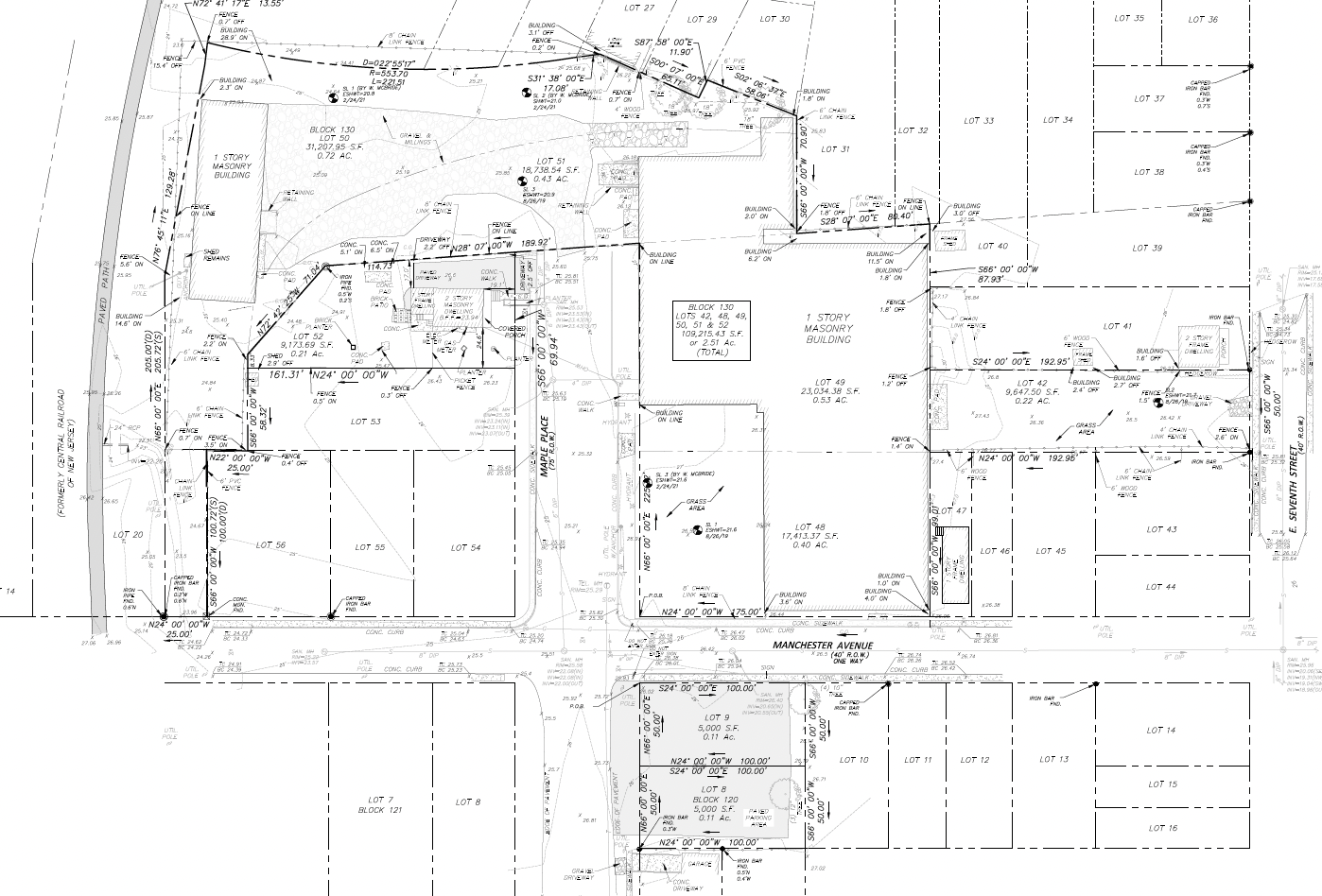
How much is an acre of land worth in New Jersey? There is no single number. It depends on what can legally be built on that acre. Farmland in the state averaged $16,600 an acre in 2025, according to the USDA. An acre that can be approved for homes is priced very differently. We buy raw land across New Jersey and turn it into build-ready lots, so this is how we think about what yours is worth.
This is general information, not legal, tax or appraisal advice. Your New Jersey attorney should review any contract before you sign it.
How much is 1 acre of land worth in NJ?
New Jersey farm real estate averaged $16,600 per acre in 2025, up 2.5% from $16,200 in 2024 (USDA NASS Land Values report). That figure measures land priced for farming. Land listed for homes or other development is usually priced higher, but asking prices on listing sites are not sale prices, and they mix wooded Pine Barrens lots with cleared tracts near a highway.
Neither number tells you what your acre is worth. For one parcel, a county or state average is a starting point for a conversation, not an answer.
Why is a price per acre misleading for your land?
Buildable land is not priced by the acre. It is priced by how many homes, or how much building, the zoning and environmental rules will allow on it. Two ten-acre parcels in the same township can be worth very different amounts if one can hold twelve homes and the other can hold two.
That is why a developer looks at a parcel the opposite way from a spreadsheet of averages. We start with what could be built, subtract what it will cost and how long approval will take, and weigh the risk that approvals do not come through. What is left is what the land is worth to a buyer who is actually going to build.
What makes one New Jersey acre worth more than another?
Zoning, utilities and environmental limits matter more than anything else. Size and location matter too, mostly because of what they allow to be built.
| Factor | Usually raises value | Usually lowers value |
|---|---|---|
| Zoning | Residential zoning that allows several homes | Large minimum lot sizes, agricultural or conservation zoning |
| Sewer and water | Public sewer and water at or near the property line | Septic and well only, or no capacity in the local system |
| Road access | Frontage on an improved public road | Landlocked, or access only over an easement |
| Wetlands | None on site, confirmed by the state | Wetlands and their buffer areas covering part of the site |
| Regional rules | Outside the Pinelands, Highlands Preservation Area and coastal zone | Inside one of them, which adds a state approval step |
| Title and taxes | Clean title, taxes current | Liens, back taxes, heirs who have not settled the estate |
None of the factors on the right makes land worthless. They change who the right buyer is and how that buyer prices the risk.
How do wetlands, the Pinelands and the Highlands affect value?
They limit how much of a parcel can be built on, so they usually lower its value. But the maps people check online are often off for a specific lot, so do not assume the worst until the land has been properly checked.
- Wetlands. New Jersey protects both wetlands and the land next to them, called transition areas. Building in either needs a permit or a waiver. The state’s wetlands maps are only an approximation. NJDEP decides the real boundary through a Letter of Interpretation (LOI), and the true extent on a site may be smaller, larger or shaped differently than the map shows.
- The Pinelands. The Pinelands Commission applies a comprehensive plan that guides land use and development across the 938,000-acre Pinelands Area of southern New Jersey.
- The Highlands. The Highlands Act designates about 398,000 acres as the Highlands Preservation Area, within a region that covers parts of Bergen, Hunterdon, Morris, Passaic, Somerset, Sussex and Warren counties.
Many land buyers treat these rules as a reason to pay less. We read the constraints first and give you an honest number anyway. See how that works for Pinelands and CAFRA parcels in Ocean County and in our guide to selling land in wetlands, the Pinelands, the Highlands or the CAFRA zone.
Is my property tax assessment the same as my land’s value?
No. The assessed value on your tax bill can be well off the market value, because towns in New Jersey assess at different percentages of market value. It also says nothing about what could be built on the land. Use it to find your block and lot, not to price a sale.
What if my land is farmland assessed?
Farmland assessment lowers your property taxes, but it can add a cost when the land’s use changes. To qualify, land generally needs at least 5 contiguous acres in agricultural use and average gross sales of at least $1,000 a year on the first five acres, with a smaller requirement for each extra acre.
When the use changes, for example because the land is going to be developed, a roll-back tax applies to the year of the change and the two tax years before it, according to the same state overview. Who pays it is something to settle in the contract, and your attorney should review that clause. Our guide to farmland roll-back taxes in New Jersey goes into more detail.
Want to know what your land is worth to a buyer?
Send the block and lot. An Acquisitions Manager calls for 15 minutes, then you get a written, formula-based offer within 48-72 hours. No fees or commissions.
How does a land buyer price your parcel?
A serious buyer works backwards from what the land can become: how many build-ready lots the parcel can realistically support, and what it takes in engineering, environmental work, approvals and time to get there. Every buyer weighs those inputs differently, which is why offers on the same parcel can vary so much.
At BayfordBridge, that reasoning goes into a written, formula-based offer within 48-72 hours, with no fees or commissions. For the right parcel there is a second option: an entitlement partnership, where we fund the surveys, engineering and applications to get the land approved, and the price reflects the approved value. It can pay more than a straight cash sale, but we will not claim that is true for every parcel.
How can I find out what my land is worth?
Start with the facts about the parcel, then get a number from someone willing to put it in writing. These steps work in any New Jersey county:
- Find your block and lot on your tax bill or the county records. Every buyer and appraiser will ask for it.
- Check the zoning with the township zoning office: which uses are allowed and the minimum lot size.
- Look at the state’s environmental maps on NJDEP’s online mapping tool for wetlands, flood areas, the Pinelands and the Highlands. Treat what you see as a first look, not a final answer.
- Ask whether public sewer and water reach the property. This one fact can change the value more than anything else on this list.
- Get a professional opinion. A licensed appraiser gives you an independent value. A direct buyer gives you a real offer you can act on.
For the full process, see our guide to how to sell land in NJ, or compare your options in who buys land in NJ.
Frequently asked questions
How much is an acre of land worth in NJ?
There is no single number. New Jersey farmland averaged $16,600 an acre in 2025 (USDA), but land that can be approved for homes is priced by what can be built on it, so the same size parcel can be worth very different amounts.
How much should I sell 1 acre of land for?
Start with the zoning, utilities, road access and any wetlands on the parcel, then ask for written offers. Price per acre is a rough check; the number a buyer can pay depends on how many homes or buildings the land can hold.
How much is an acre of wetland worth?
Usually less than comparable dry land, because wetlands and their buffers limit what can be built. The real extent on a parcel is set by an NJDEP Letter of Interpretation, which can differ from the online maps.
Is my assessed value the same as what my land would sell for?
No. Towns assess at different percentages of market value, and the assessment does not account for what could be built on the land.
Do you buy land with wetlands, Pinelands or Highlands limits?
Often, yes. We buy where a favorable wetlands delineation is achievable and give an honest number on constrained land. We do not buy preserved farmland, Green Acres land, commercial or industrial land, or land with a large unfavorable wetlands presence.
Do I pay a commission if I sell to BayfordBridge?
No. We are the buyer, not a broker, so there are no fees or commissions. You pay your own attorney and your own realty transfer fee.
Sources checked
Checked on October 9, 2026:
- USDA NASS, Land Values 2025 Summary: New Jersey farm real estate $16,600 per acre in 2025, up 2.5% from 2024.
- NJDEP, Highlands: about 398,000 acres designated as the Highlands Preservation Area; counties covered by the region.
- NJ Pinelands Commission, About the Commission: 938,000-acre Pinelands Area.
- NJ Department of Agriculture, Farmland Assessment overview: acreage and sales requirements, and the roll-back tax period.
- NJDEP, Freshwater wetlands: wetlands and transition areas.
Want a number before you decide? Tell us about your parcel and you will get a call, then a written offer within 48-72 hours. Or call (732) 852-9571.
This article is general information, not legal, tax or appraisal advice. Talk to your attorney and tax professional about your situation.
About the authors

Chris Muldoon, MBA
COO & Director of Acquisitions
Chris Muldoon is COO and Director of Acquisitions at BayfordBridge, a New Jersey land acquisition and entitlement company based in Red Bank. He leads the team that evaluates and makes offers on land across the state.

Mitchel Rubinstein, MBA
CEO & Founder
Mitchel Rubinstein is CEO and Founder of BayfordBridge, with roots in the family’s 30+ year residential development business.
No commission · No obligation
Your land. A real number. This week.
Send the address or Block/Lot. A named person at BayfordBridge reviews it and sends a written, formula-based offer within 48–72 hours, even on wetlands, Pinelands, Highlands or back-tax parcels.
Prefer to write first?