NJ Property Tax Records and Tax Maps: How to Look Up Any Parcel
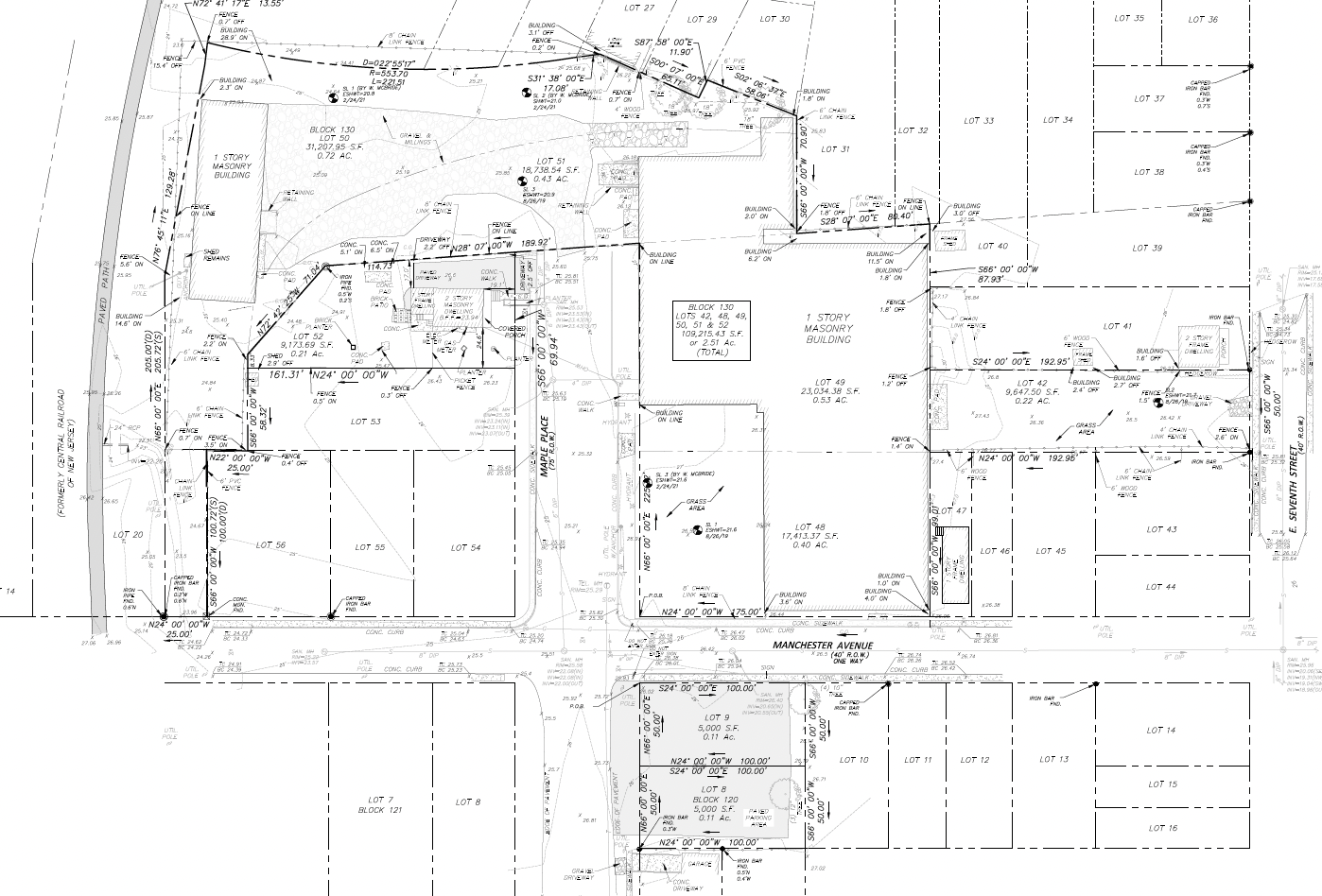
Every parcel in New Jersey has a block and lot on its town’s tax map and a record on the town’s tax list. To look one up, go to your county board of taxation’s online tax record search and search by owner name, street or block and lot. The record shows the owner, the property class, the assessed value, the lot size and, often, the last sale price and date. The tax map itself comes from the municipality, and many county tax boards post copies online.
Have your block and lot? Request a cash offer for your NJ parcel in 48 to 72 hours.
Here is where to search in each county, how to read what you find, and why the assessed value is not what your land is worth.
This is general information, not legal, tax or appraisal advice.
What is in a New Jersey property tax record?
New Jersey keeps its assessment records in a statewide system called MOD-IV, which the Division of Taxation describes as the system that maintains assessment records and produces the tax lists used for property tax bills. A typical record shows:
- Block, lot and qualifier. The parcel’s ID on the tax map. The qualifier is an extra code used mainly for condominium units and some special parcels.
- Owner name and mailing address.
- Property location. The street address, if the parcel has one. Vacant land often shows only a road name.
- Property class. A code for how the parcel is classified, explained below.
- Land value, improvement value and net taxable value. The assessment split between the land and any buildings.
- Acreage or lot size.
- Deed book and page, sale date and sale price, where recorded.
How do I search NJ property tax records by county?
- Find your county board of taxation. The New Jersey Association of County Tax Boards lists all 21 at njactb.org/county-tax-boards.
- Open the tax record search. Most county tax boards offer an online search. Monmouth County runs its search through the county’s Open Public Records Search, Ocean County has a Tax List Search and an SR1A Search, and Morris County lets you search by property location, owner, or block and lot, including prior block and lot numbers.
- Search by block and lot if you have it. It is the most reliable search. If you only have an address, search the street name and pick the right number. For vacant land, the owner’s name often works best.
- Check the tax year. Many searches default to the current year but keep past years, which shows how the assessment and owner changed over time.
Your town’s tax assessor and tax collector can also answer questions about a record, and the collector can tell you whether taxes are paid up to date.
What do NJ property class codes mean?
The class code tells you how the assessor classifies the parcel. The main classes, from the Division of Taxation’s MOD-IV handbook:
| Class | Meaning |
|---|---|
| 1 | Vacant land |
| 2 | Residential (four families or less) |
| 3A | Farm (regular): the farmhouse and farm buildings |
| 3B | Farm (qualified): land that qualifies for farmland assessment |
| 4A | Commercial |
| 4B | Industrial |
| 4C | Apartment |
| 15A to 15F | Exempt property, such as public, school, church and charitable property |
For Class 1 vacant land and Class 3B qualified farmland, only the land is assessed. If your land shows 3B, it is farmland assessed, and roll-back taxes can apply when the use changes. Our guides to farmland assessment and rollback taxes in NJ explain both.
Is the assessed value what my land is worth?
No. New Jersey property is assessed at a percentage of true value set for each county, and towns are reassessed at different times, so the assessment can be far from today’s market value. Each year the Division of Taxation publishes every town’s average ratio of assessed value to true value in its Table of Equalized Valuations.
For a rough cross-check, divide the assessment by the town’s average ratio. If a town’s ratio is 70% and the land is assessed at $70,000, that suggests an equalized value of about $100,000. Even that is an average across the whole town, not a price for your parcel. For buildable land, what can legally be built matters far more, as our guide to what an acre of land is worth in NJ explains.
Found your block and lot? Get a real number.
Send the block and lot. An Acquisitions Manager calls for 15 minutes, then you get a written offer within 48 to 72 hours. No fees or commissions.
Where do I find NJ tax maps?
The tax map is the official map of blocks and lots for a municipality. You can get it from:
- The municipality. The tax assessor’s or engineering office keeps the official tax map and can provide copies.
- The county tax board. Several counties post tax map sheets online. Monmouth County, for example, links its tax maps from its public records search.
- Online parcel maps. NJDEP’s NJ-GeoWeb shows parcel outlines and finds a lot by county, municipality, block and lot. Our step-by-step NJ-GeoWeb guide shows how.
Online parcel outlines are drawn from tax maps and are approximate. Only a survey shows exact boundaries.
How do I find what land sold for nearby?
When a New Jersey property sells, an Affidavit of Consideration (Form RTF-1) is filed with the deed, and county tax boards keep the resulting sales data. Many tax record searches show each parcel’s last sale price and date, and some counties, such as Ocean, offer a separate SR1A sales search.
Read sales with care. Family transfers, estate sales and deals between related parties are often far below market. A sale of a lot with approvals is not comparable to raw land without them. And a few sales in a town are not enough to price one parcel.
Where BayfordBridge fits
We are a direct buyer and residential developer based in Red Bank, buying land in all 21 New Jersey counties. The block and lot is all we need to start: we pull the tax record, the maps and the zoning, and price what can actually be built.
Have your block and lot? Send it to us. An Acquisitions Manager calls for 15 minutes, and you get a written offer within 48 to 72 hours. Or call (732) 852-9571.
Frequently asked questions
Are New Jersey property tax records public?
Yes. Tax lists are public records, and county boards of taxation publish search tools online. Some personal details may be withheld under state law.
Can I search NJ property records by owner name?
Usually, yes. Most county tax record searches accept an owner name, a street name, or a block and lot.
What does class 3B mean on a NJ tax record?
Class 3B is Farm (Qualified): land that qualifies for farmland assessment. Only the land is assessed, and roll-back taxes can apply if the use changes.
How do I get an official NJ tax map?
Ask the municipal tax assessor or engineering office. Many county tax boards also post tax map sheets online.
Why is my assessed value so different from market value?
Assessments are set at a percentage of true value and towns reassess at different times. The Division of Taxation publishes each town’s average ratio so you can compare.
Sources checked
Checked on November 13, 2026.
- NJ Division of Taxation, MOD IV Handbook: property classes 1, 2, 3A, 3B, 4A, 4B, 4C and 15; land-only assessment for Class 1 and Class 3B.
- NJ Division of Taxation, How My Property is Valued: property assessed at a percentage of true value set by the county board of taxation.
- NJ Division of Taxation, Statistical Information and Table of Equalized Valuations: average ratio of assessed to true value by municipality.
- NJ Association of County Tax Boards, County Tax Boards: links to all 21 county boards.
- Ocean County Board of Taxation, Tax List Search and SR1A Search; Morris County Board of Taxation, Search Tax Records; Monmouth County Open Public Records Search and tax maps.
Related guides
About the authors

Chris Muldoon, MBA
COO & Director of Acquisitions
Chris Muldoon is COO and Director of Acquisitions at BayfordBridge, a New Jersey land acquisition and entitlement company based in Red Bank. He leads the team that evaluates and makes offers on land across the state.

Mitchel Rubinstein, MBA
CEO & Founder
Mitchel Rubinstein is CEO and Founder of BayfordBridge, with roots in the family’s 30+ year residential development business.
No commission · No obligation
Your land. A real number. This week.
Send the address or Block/Lot. A named person at BayfordBridge reviews it and sends a written, formula-based offer within 48 to 72 hours, even on wetlands, Pinelands, Highlands or back-tax parcels.
Prefer to write first?